During 2019 Plaxis User Meeting in İstanbul, I have presented a detailed discussion on Hardening Soil Model. The presentation was really welcomed by the audience and in fact, later on, I have been invited to two other companies for the same presentation. This short post will be a summary of that presentation.
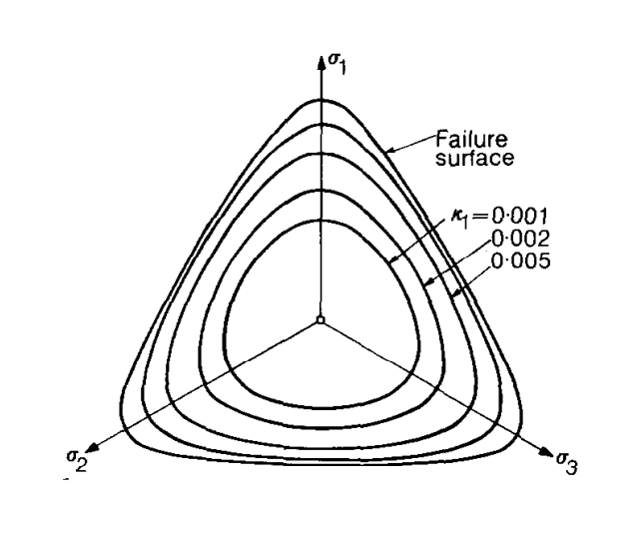
Hardening Soil model (will be called HS from now on) was presented in an excellent conference for 10th year of Plaxis in a paper called The hardening soil model: Formulation and Verification by Schanz, Vermeer and Bonnier. However, HS is tightly bonded to previous studies on the literature such as Lade, Tatsuoka and Ishihara, Cam-Clay model, Kondner and Zelasko, Jardine, Duncan and Chang, Al Tabbaa, Simson et. al.
1 What is Hardening?
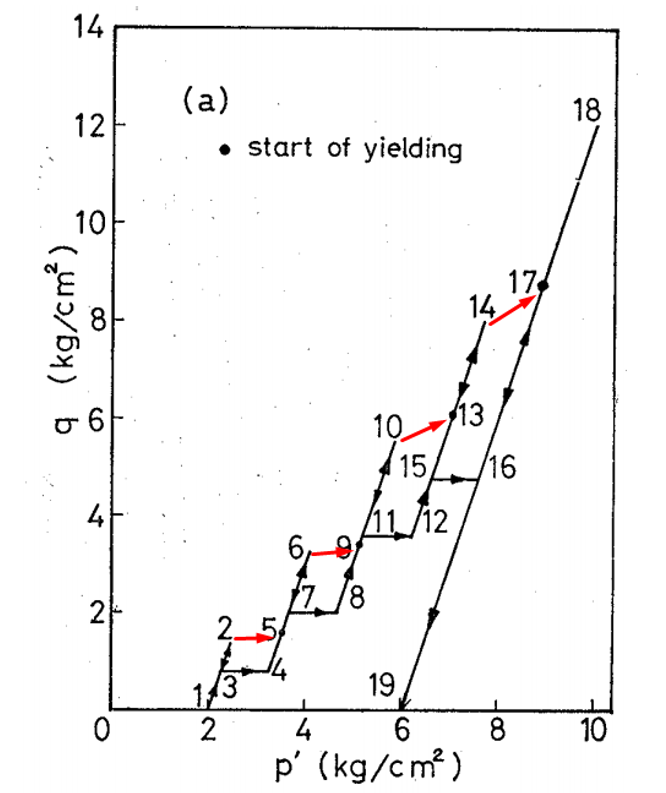
Hardening behaviour of soils is shown on the experiments on Tatsuoka and Ishihara (1978) on sand samples. On each cycle, yield starts on the previous cycle’s maximum stress. We will see that later on on the preconsolidation pressure concept of HS.

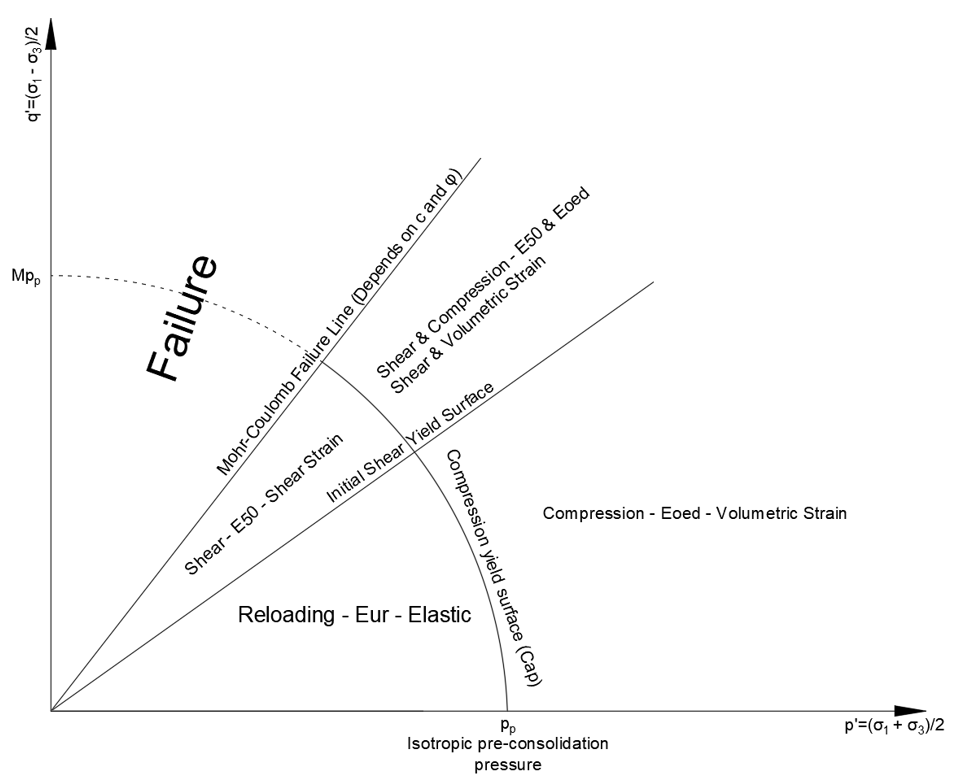
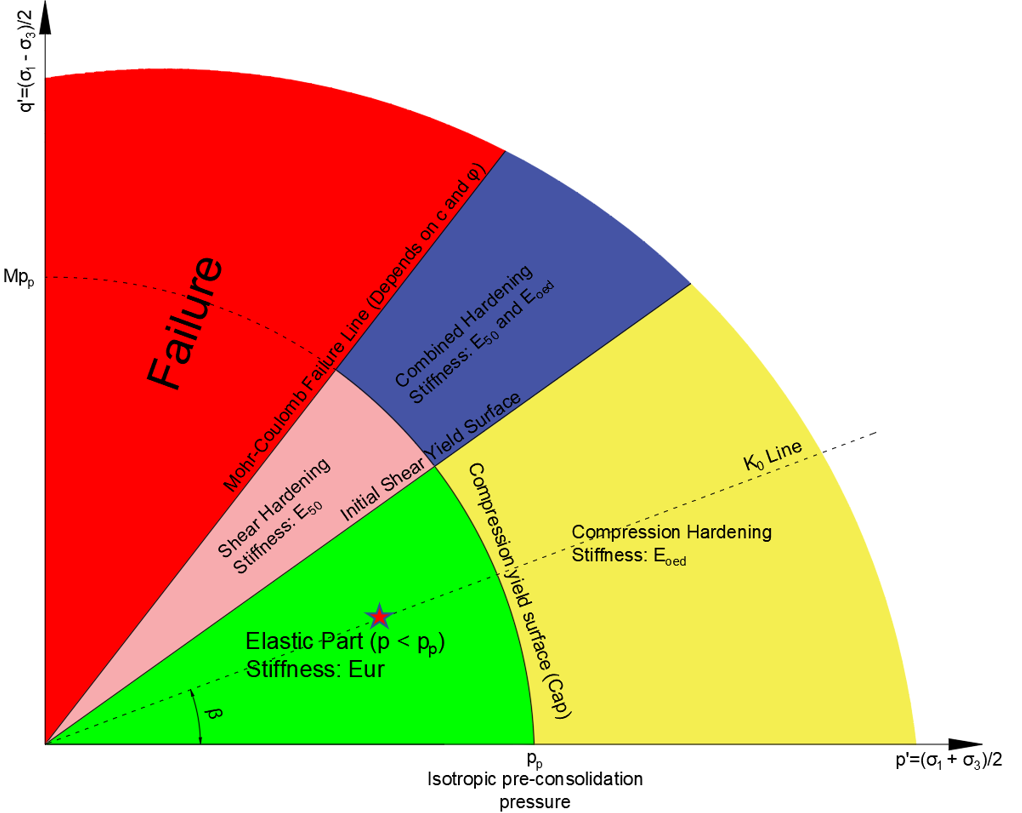
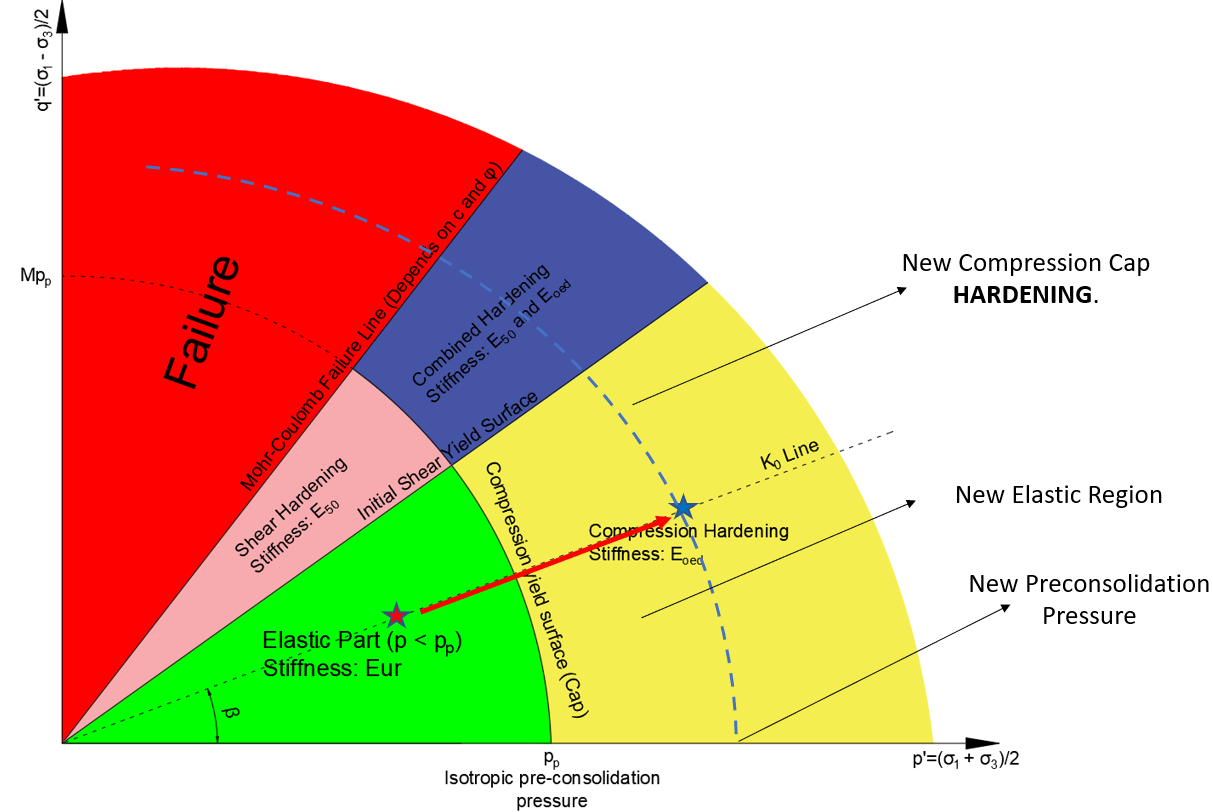
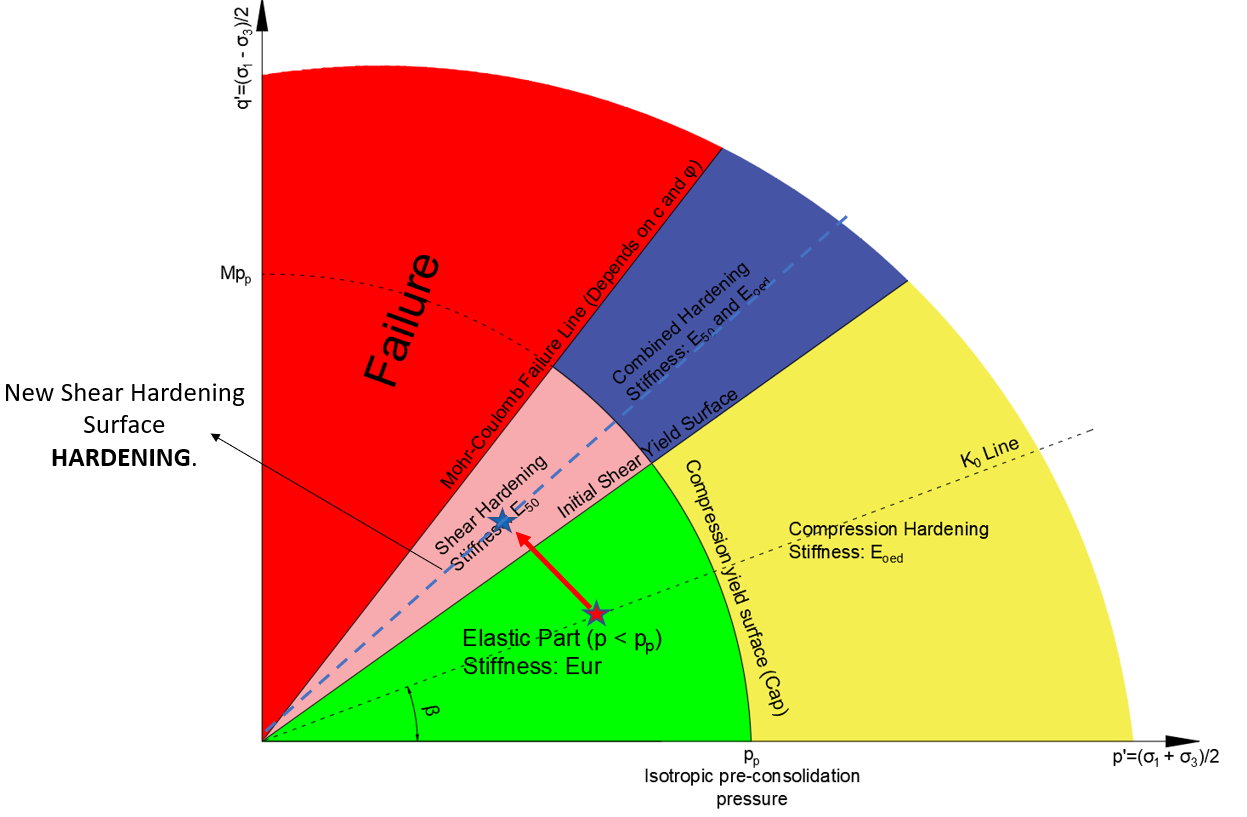
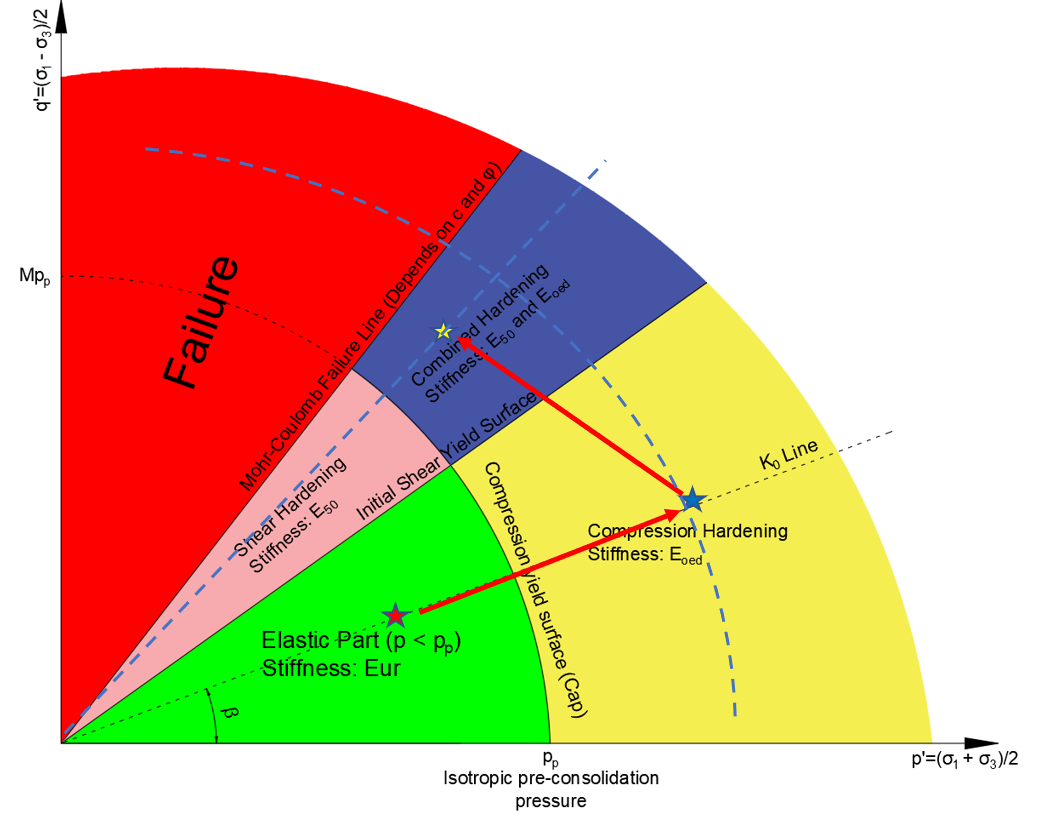
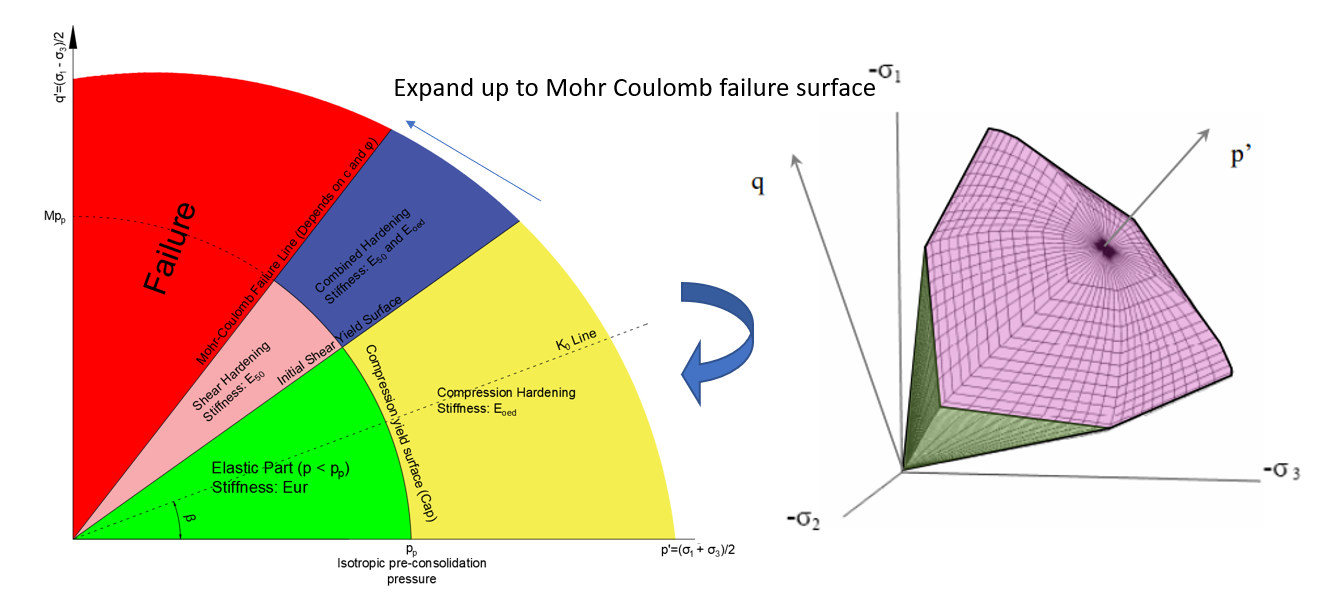
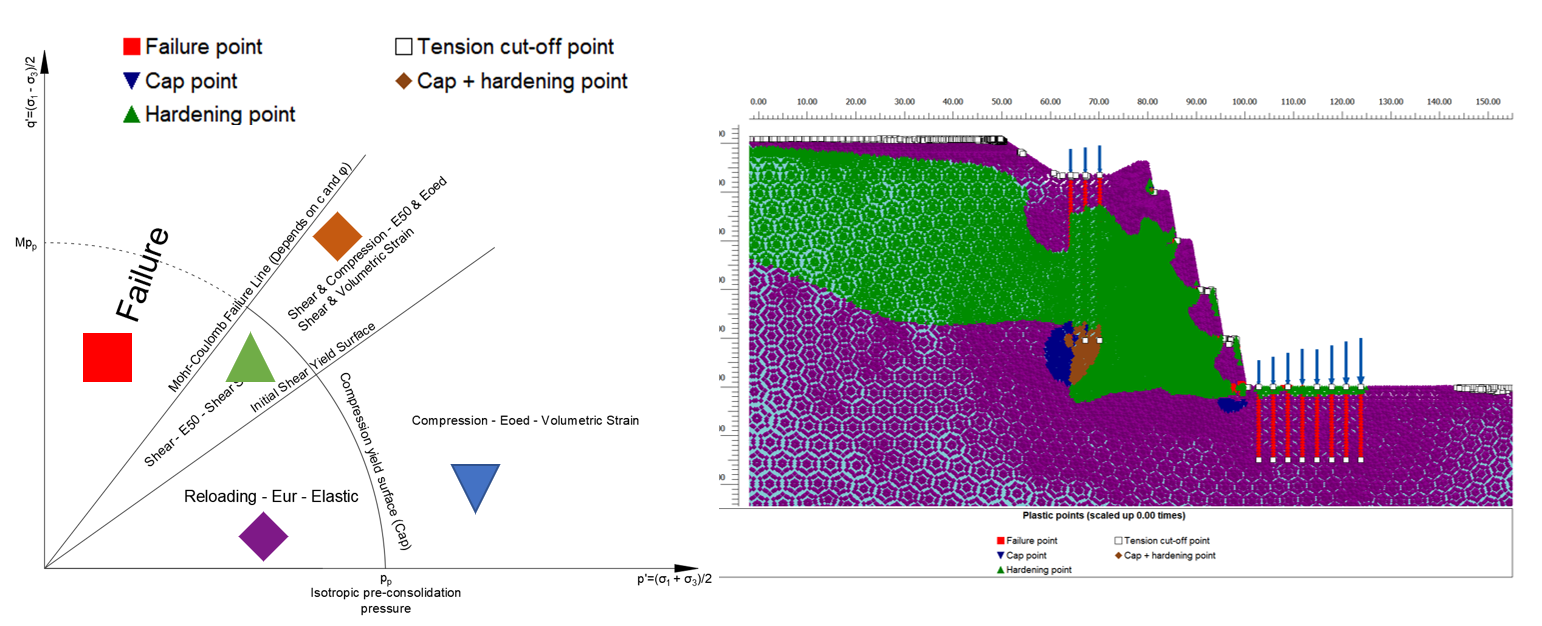
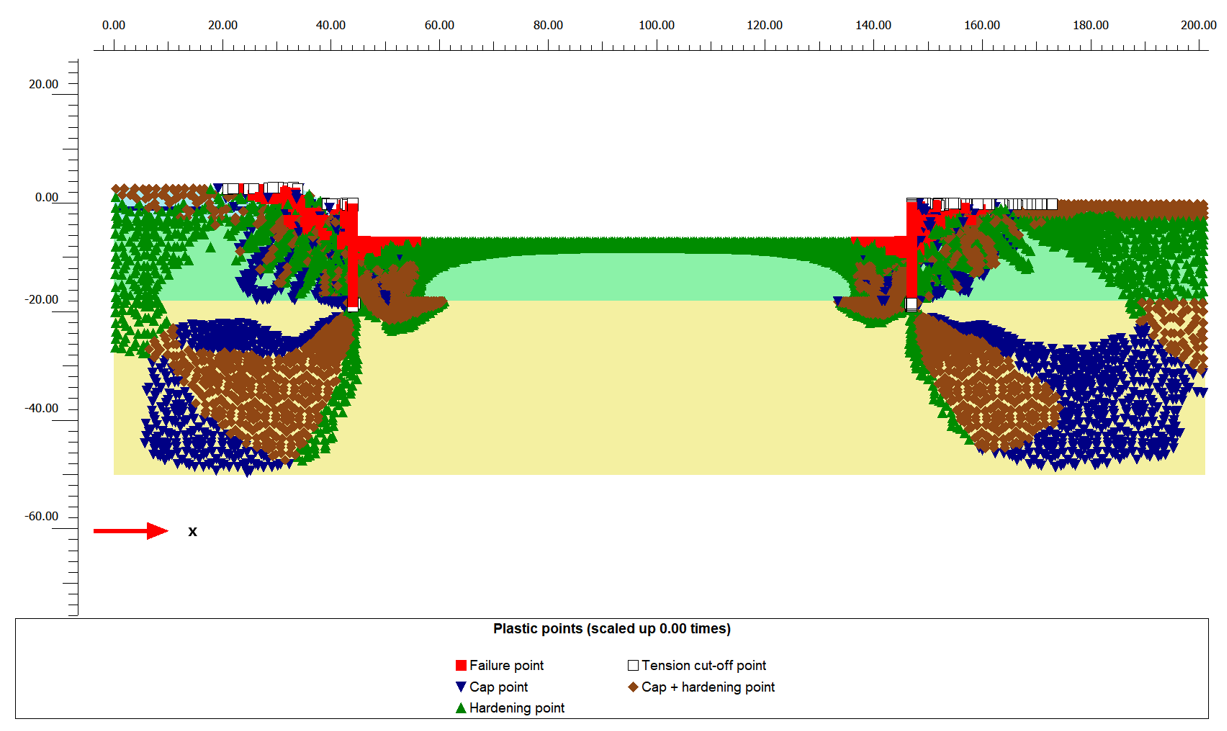
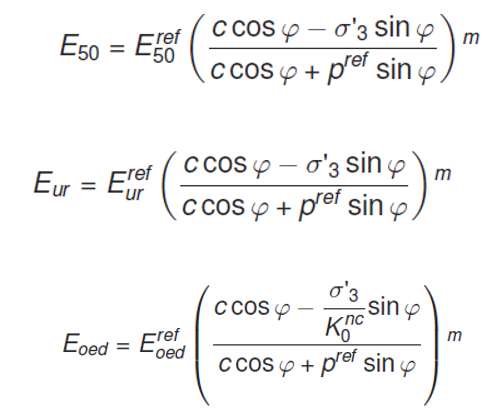
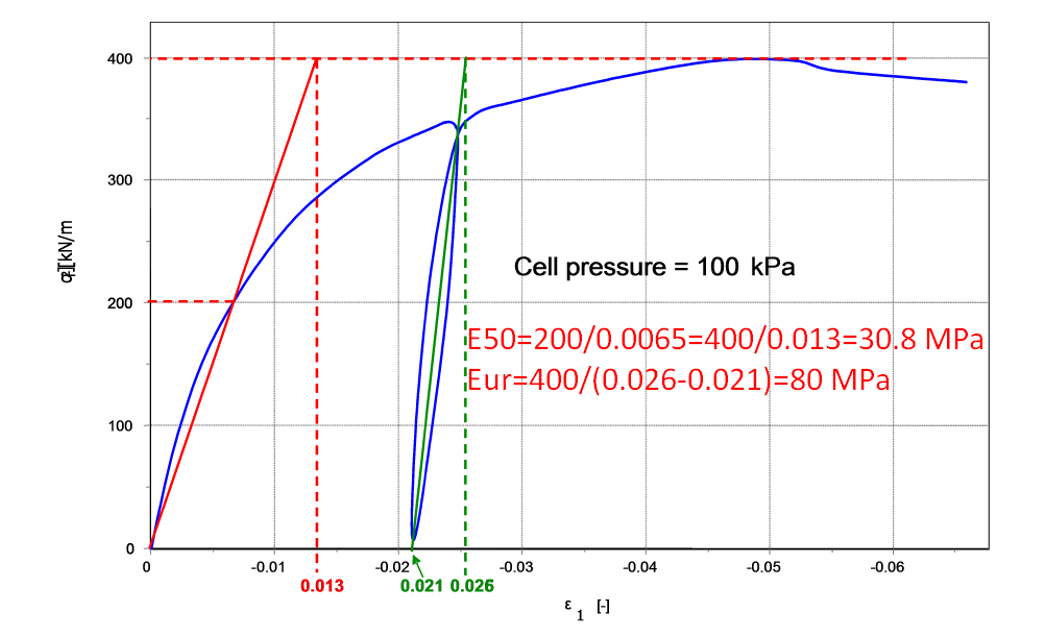
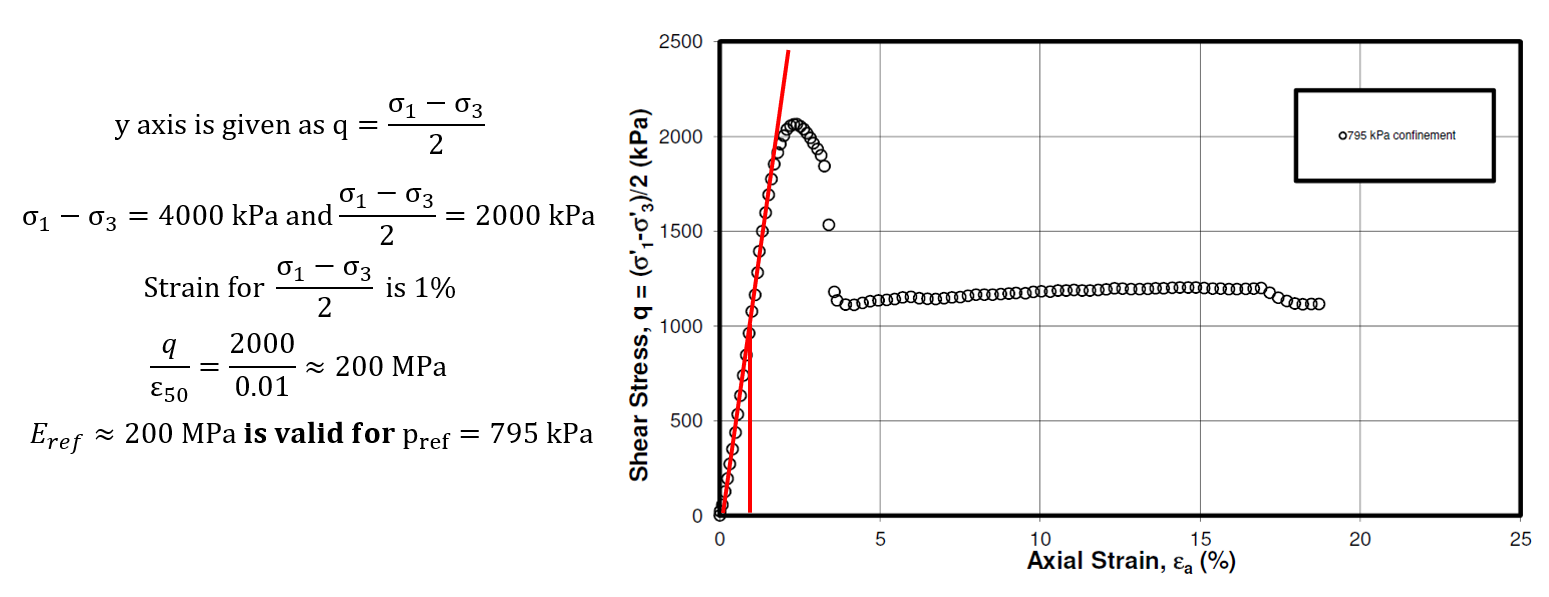
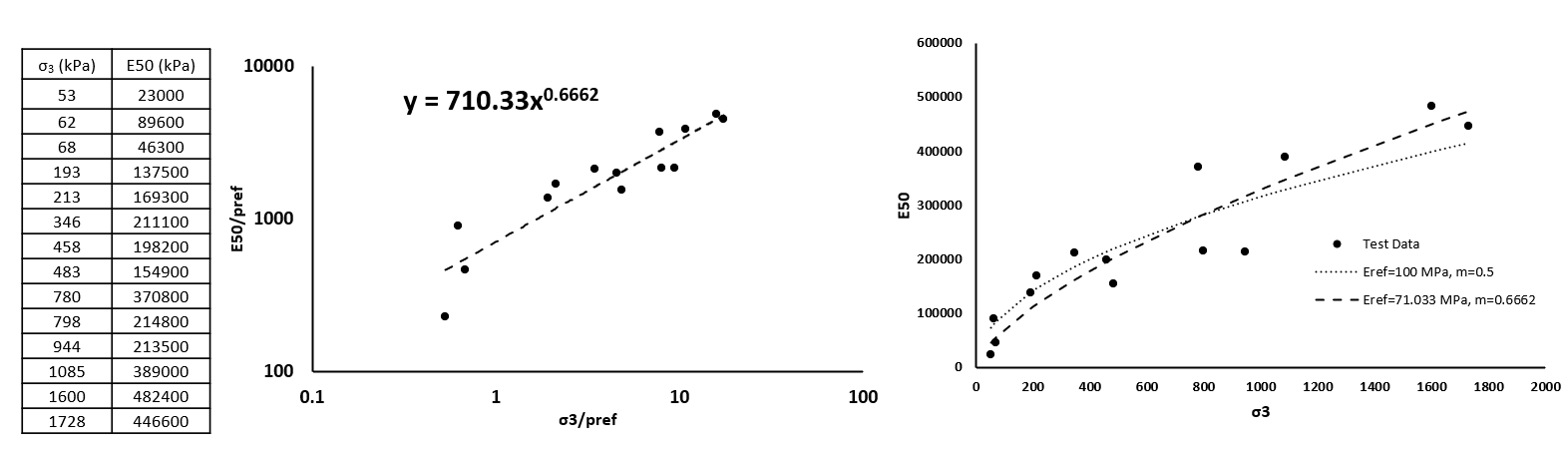
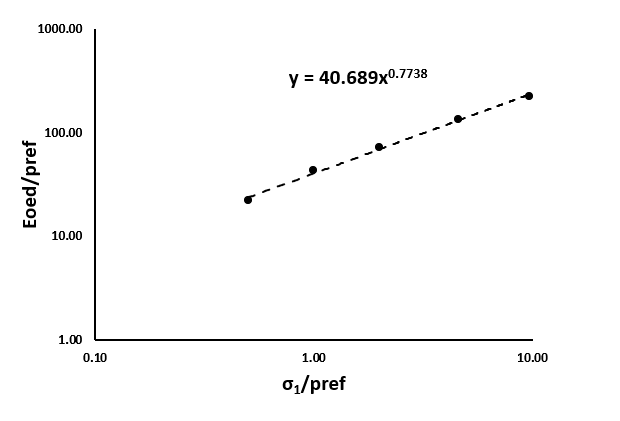
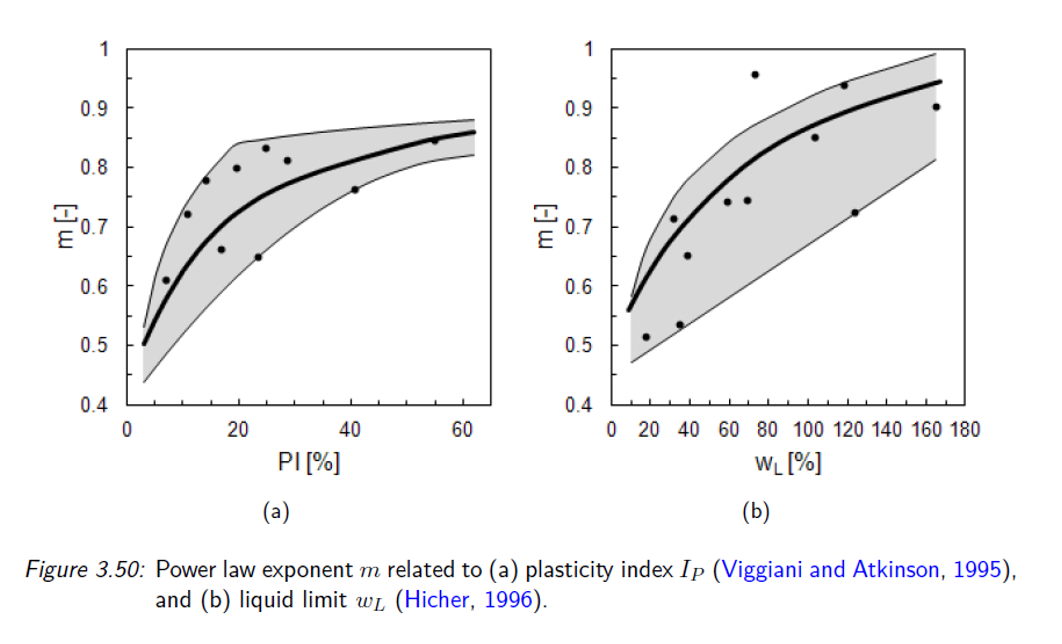
Also, Brinkgreve et. al. (2010) recommends following equation for granular soils. (See the original paper for other correlations regarding the HS parameters.)
$$
m = 0.7 − RD/320
$$
4.3 Reloading Poisson’s Ratio, v_ur
Unloading/reloading poisson’s ratio is denoted as vur. It should be noticed that vur is not classical poisson’s ratio! In the absence of laboratory data, it should be left as the default value 0.2.
4.4 OCR / POP
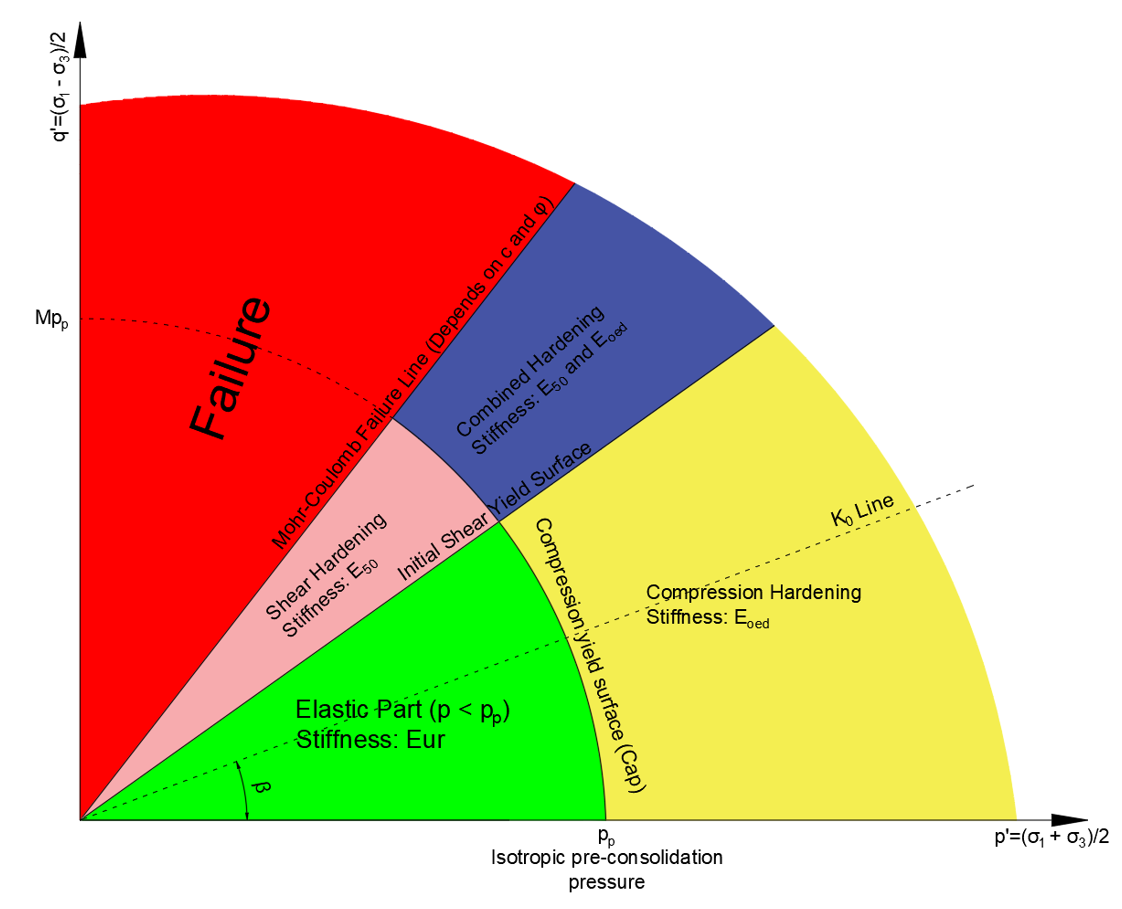
Overconsolidation Ratio (OCR) and Pre-Overburden Pressure (POP) are used to define the initial state of the material. In case of high OCR values, K can be too high since K depends on OCR. This may cause plastic points in initial stage.
4.5 Rf
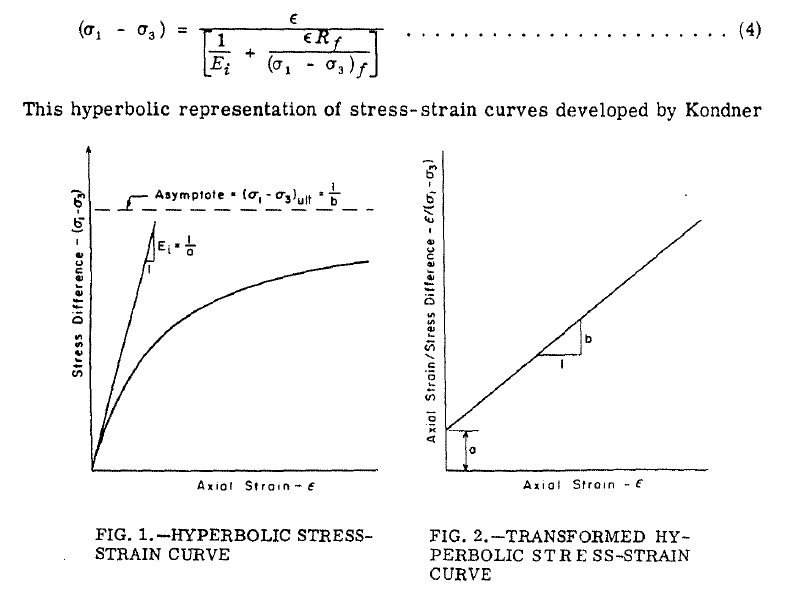
Failure ratio, Rf, is defined by Duncan & Chang (1970) to come up with a value at failure pressure due to asymptotic behaviour. It is recommended to keep the value between 0.75 and 1.00. In the absence of data, default value recommended by Plaxis (0.9) can be used.